Regulations
How to choose a hunting outfitter in Canada
The questions that separate a real operation from a good website.
Choosing an outfitter is the single decision that most determines whether your hunt is good. The right questions are concrete: does the outfitter actually hold the allocation for the species and area, what is genuinely included and excluded, how are deposits and cancellations handled, and is their regulatory information current. A slick website proves nothing; a stale price for a hunt that is no longer legal proves a lot. Below is the checklist that separates a real operation from a good website, the deposit norms to expect, and the red flags that should make you close the tab.
The checklist
- Allocation: does the outfitter hold provincial allocation for your species and area? In the West this is how your tag exists.
- Territory: guide outfitters in BC hold exclusive territories; ask which country you will actually hunt.
- Inclusions: what does the price cover? On our hunts the price covers guiding, lodging, meals, in-field transport, airport transfers and airline-ready animal packaging.
- Exclusions: licences, tags, WIN card, GST, tips, airfare, taxidermy and CITES export are commonly the hunter's cost.
- Deposits: a staged, non-refundable first payment is normal; know the schedule in writing before you commit.
- Numbers taken: fewer hunters (we take four moose hunts a year) usually means a better hunt.
- Terrain and style: horseback backcountry vs road-based changes the whole experience.
Green flags vs red flags
| Signal | Green flag | Red flag |
|---|---|---|
| Regulations | Current, matches the official authority | Prices for closed hunts (BC grizzly, banned 2017), or calling Yukon Stone sheep closed when it is open |
| Inclusions | Spelled out clearly, in writing | Vague or missing |
| Deposits | Staged, written cancellation terms | Pay in full, no written terms |
| Allocation | Names the species and area they hold | Hand-waves the tag question |
| Hunter numbers | Limited, disclosed | Unlimited or unclear |
The stale-price tell, and other red flags
The sharpest single red flag is a price list that is out of step with the current regulations. BC grizzly hunting has been banned since 2017, yet stale grizzly prices still circulate on ranking pages and even on some outfitter sites. The currency test cuts the other way too: some pages still call Yukon Stone sheep closed when it is open and booking for 2026, with only localized Dall sheep zones (GMS 5-17 and the Kluane Sanctuary) affected. Either error tells you the same thing. An outfitter who does not keep their regulations current is exactly who you do not want handling your firearm importation, your allocation and your deposit. Old information is not a small cosmetic problem, it is a window into how the whole operation is run.
The other red flags follow the same logic. Vague or missing detail on what is included and excluded means surprises on your invoice. Pressure to pay in full with no staged deposit or written cancellation terms means you are carrying all the risk. Regulatory claims that do not match the official provincial authority mean either sloppiness or worse. Any one of these is a reason to slow down; two of them together is a reason to walk.
Allocations and territory: the questions to ask
Because your tag in the West comes through the outfitter's allocation, the allocation question is not optional. Ask directly whether they hold the provincial allocation for your species and area, and in British Columbia, which exclusive territory you will hunt. A serious outfitter answers this plainly; a vague answer is itself information. On our Alberta Rockies hunts we hold provincial allocations and hunt a specific backcountry zone where motorized vehicles are prohibited, so the country is reached on horseback and foot. That is the level of specificity you want: a named area, a real allocation, a clear method. If you are still working out the legal picture, start with do you need a guide in Canada.
Deposit structure norms
Knowing what normal looks like keeps you from being alarmed by a fair deal or reassured by a bad one. A staged deposit is standard: our big-game hunts take a non-refundable one-third to book, a second third six to eight months out, and the balance 31 days before arrival, while our recreation side runs a smaller 25 percent deposit with free cancellation up to seven days out. The exact split varies by outfitter and hunt, but the shape, a non-refundable deposit to hold a dated spot plus a written cancellation policy, is what you should expect and see in writing. We walk through timing in when to book. How the outfitter's fee is structured against booking agents and marketplaces is a separate topic we cover in booking direct vs agent vs marketplace.
References, fit, and the questions that surface the truth
We do not publish invented testimonials or success rates, and you should be wary of anyone who leans hard on them, because numbers with no source are the easiest thing on the internet to make up. What you can do instead is ask a real outfitter to put you in touch with past hunters, and then ask those hunters plain questions: what the country and the accommodations were actually like, how hard the guide worked, whether the final invoice matched what they were quoted. A confident outfitter puts you in touch; a reluctant one is telling you something.
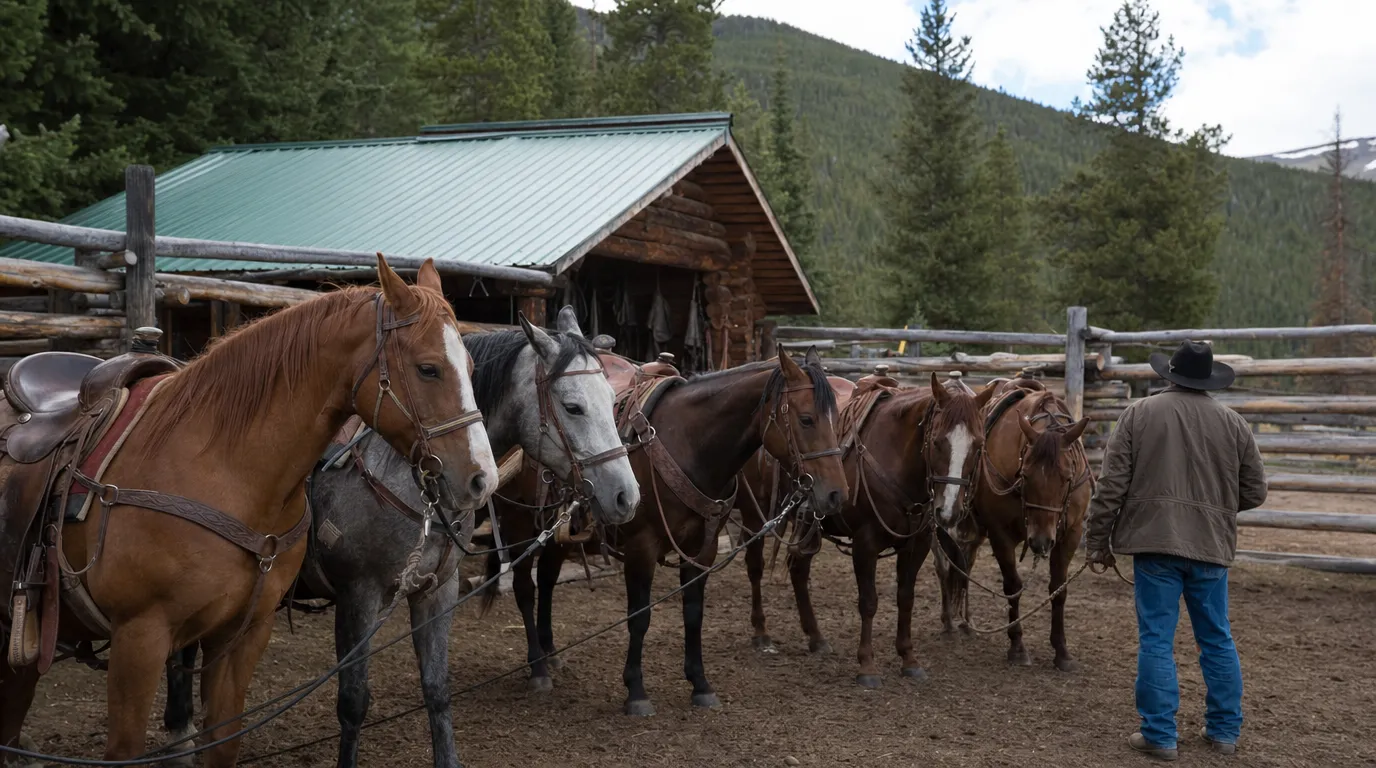
Beyond references, the last filter is fit. An outfitter can be entirely legitimate and still be wrong for you if the style does not match what you want. A horseback backcountry operation where motorized vehicles are prohibited, like the country we hunt on our Alberta hunts, is a different trip from a road-and-lodge hunt, in effort, in feel and in who it suits. Decide what kind of hunt you are actually after, our species and province hubs like hunting in Alberta lay out the options, then judge each outfitter against that, not against a glossy photo. The right questions plus an honest look at fit will tell you more than any star rating.
Common questions
Q. What should I ask a hunting outfitter before booking?
Whether they hold the allocation for your species and area, exactly what is included and excluded, the deposit and cancellation schedule in writing, how many hunters they take, and confirmation their regulatory information is current.
Q. What are red flags with a hunting outfitter?
Offering hunts for closed species (BC grizzly has been banned since 2017), regulatory claims that are out of date (for example calling Yukon Stone sheep closed when it is open and booking, with only localized Dall zones affected), vague inclusions, and pressure to pay in full with no staged deposit.
Q. Why is a stale grizzly price a warning sign?
BC grizzly hunting has been banned since 2017. An outfitter still advertising it is not updating their own materials, which signals an operation that does not keep its regulations, and likely its logistics, current.
Q. What deposit is normal for a Canadian hunt?
A staged, non-refundable first payment. We take one-third to book, one-third six to eight months out, and the balance 31 days before arrival, with a written cancellation policy. Expect that shape and get it in writing.
Q. How do I confirm an outfitter holds a real allocation?
Ask directly which species and area they are allocated for, and in BC which exclusive territory you will hunt. A serious outfitter names it plainly; a vague answer is a warning in itself.
Q. How do I know an outfitter is legitimate?
They hold real provincial allocation, are clear about inclusions and deposits, keep their regulations current, and take a sensible number of hunters. Those are the standards we hold ourselves to on our own hunts.
Keep reading
Plan your hunt
Ask us about choosing the right outfitter
Tell us what you are after. We reply within 1 to 2 business days with honest numbers, real dates and the outfitters we would send our own family to. It costs you nothing.