Species hub
Elk hunting Alberta: guided elk hunts in Canada's Rockies
Rut hunts, migration hunts, and what separates a $7,500 elk hunt from a $12,000 one.
A guided elk hunt in Canada runs roughly $5,000 to $12,000 for a standard trip, with premium trophy bull hunts climbing past $25,000 and cow-only elk hunts as low as $1,000 to $2,000. In Alberta, the two common formats are a rut hunt, chasing bugling bulls, which is usually the priciest, and a later migration hunt at lower cost. Non-residents cannot hunt elk on their own in Alberta or British Columbia. You go with a licensed outfitter-guide, and that is not a formality: it is the law.
Below we cover what an elk hunt in the Canadian mountains actually feels like, where the bulls are by province, what drives the price, and how the booking works. For the full stack of costs, licence and tag fees, GST, tips, travel and export, see our guided elk hunt cost guide.
What a Canadian elk hunt is like
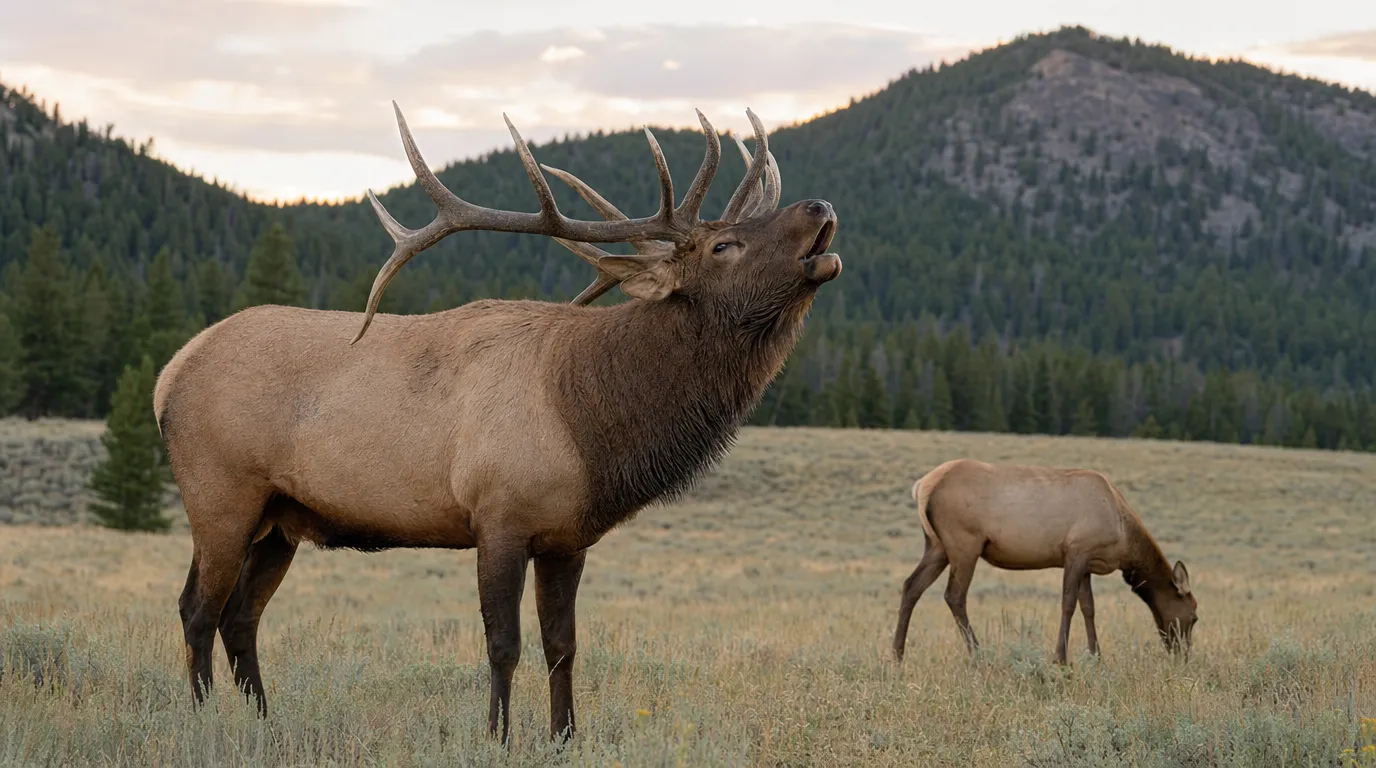
Elk are a mountain and foothills animal in western Canada, and a guided hunt here is a physical one. In the rut a good guide calls bulls through the timber and the grassy parks, working a bugle and a cow call until a herd bull answers and commits. That is the loud, close-range version of elk hunting, and it is the one most hunters picture when they book. Later in the fall the elk drop toward winter range, and a migration hunt intercepts them on the move. It is quieter, glassing-heavy work, and it usually costs less.
The rugged part is not marketing. Our elk hunts run out of a backcountry camp in the Blackstone and Wapiabi Forest Land Use Zone northwest of Nordegg, where motorized vehicles are prohibited and you get in and out on horseback and foot. Base is a set of cabins at the Blackstone and Wapiabi river junction, and our camp carries on an outfitting tradition that runs more than a hundred years in that country. This is the horseback, wall-tent, no-truck version of a hunt that a lot of people say they want and never actually book.
That format is the point of hunting Canada with a guide. You are not driving to a stand. You are riding into a valley, glassing at first light, and coming back to a camp your guide packed in. If the goal is to hunt the way it was done before quads and side-by-sides, this is where you do it.
Where to hunt elk in Canada
Alberta and British Columbia hold the strongest guided elk opportunities in this network. Both require non-residents to hunt with a guide, and both run an outfitter-allocation system, so the availability of a tag is set by an outfitter's allocation rather than a lottery you enter yourself. For a non-resident, that is usually good news: no drawing for years, you book an allocated hunt directly.
- Alberta: foothills and mountain rut and migration hunts, the core of our elk coverage and our camp near Nordegg.
- British Columbia: guide-outfitter territories with exclusive government allocation, a wide spread of terrain from the Rockies to the interior.
What a guided elk hunt costs
The hunt price is the biggest line but not the only one. Our fee already includes guides, accommodations, meals, transport during the hunt, airport transfers, pre and post-hunt lodging, and animal prep with airline-ready packaging. Excluded are your licences and tags, the WIN card, 5% GST, airfare, tips, and any taxidermy or export. Budget those separately. The full line-by-line breakdown lives in our guided elk hunt cost guide.
| Hunt type | Typical price (USD) | Notes |
|---|---|---|
| Rut hunt (bugling bulls) | $9,500 / 10 days | Our rut hunt; horseback backcountry camp |
| Migration hunt | $7,500 / 6 days | Our migration hunt; later season, lower cost |
| Standard guided elk (market) | $5,000 - $12,000 | Across western outfitters |
| Cow / meat elk | $1,000 - $2,000 | Antlerless, budget option |
| Premium trophy bull | $25,000+ | Top-end access and genetics |
The law says you need a guide. Good.
In Alberta, British Columbia, Yukon and the Northwest Territories, a non-resident cannot hunt big game alone. You go with a licensed outfitter-guide (or, in Alberta only, an unpaid resident hunter host). We treat that as the whole point: the guide is the person who turns a licence into an actual hunt. See do you need a guide in Canada.
Seasons and tags
Elk seasons and tag rules vary by province and by wildlife management unit, and they change year to year. We do not publish specific date ranges we cannot source. What we can say is that the rut hunt runs in the bugling season and the migration hunt runs later, once the elk move. When you enquire we confirm the current dates, the unit, and the allocation for the exact hunt you are considering.
Alberta versus British Columbia elk
Alberta is the heart of our elk coverage. The foothills and front ranges near Nordegg hold elk that a horseback outfitter can hunt hard through the rut and the migration, and the province's outfitter-allocation system means a non-resident books an allocated tag rather than waiting years on a draw. It is also where our own camp runs, so it is the elk hunt we can speak to in the most detail.
British Columbia gives you a bigger, more varied canvas. Guide-outfitters there hold exclusive territories under government allocation, spread across the Rockies, the Kootenays and the interior, so the terrain and the style of hunt vary more from one territory to the next. What does not vary is the guide requirement: a non-resident hunts elk in BC with a licensed guide outfitter, an assistant guide, or a resident holding a Permit to Accompany.
If you want to hunt elk and add a second species in the same trip, combination hunts are negotiated case by case. We fold a wolf in for free with any hunt and can pair elk with deer where the tags and dates allow. Ask and we will get you the combination terms.
What moves the price
Within the $5,000 to $12,000 band, the variable that matters most is format. A one-on-one guide costs more than two hunters sharing a guide. The rut costs more than the late-season migration. A deep backcountry horseback camp costs more than a hunt worked off a road system, and trophy-managed private land sits at the very top of the market past $25,000. When you compare two quotes, compare those variables and what is included, not just the headline number. A cheap hunt with everything stripped out can end up costing more than a higher fee that includes lodging, meals, transport and trophy prep.
Booking and lead time
Quality guided hunts commonly book one to two years out, and the good weeks in the rut go first. We hold your hunt on a one-third non-refundable deposit, with a second third due six to eight months out and the balance due 31 days before you arrive. Our camp is about three and a half hours from both the Calgary and Edmonton airports, which keeps the travel side of a backcountry hunt simple. If you are working out your dates, see when to book a guided hunt and then tell us what you are after.
Common questions
Q. How much does a guided elk hunt in Canada cost?
Standard guided elk hunts run about $5,000 to $12,000. Cow elk hunts are cheaper at $1,000 to $2,000, and premium trophy bull hunts can top $25,000. We price our rut hunt at $9,500 for 10 days and our migration hunt at $7,500 for 6 days. Licences, 5% GST, travel and tips are extra.
Q. Do I need a guide to hunt elk in Canada as a non-resident?
Yes. In Alberta and British Columbia a non-resident must hunt big game, including elk, with a licensed outfitter-guide. In Alberta the only alternative is an unpaid resident hunter host who has not hosted in the previous two fiscal years, which is not an option for most visiting hunters.
Q. What is the difference between a rut hunt and a migration hunt?
A rut hunt targets bugling bulls in the breeding season and is the more active, higher-priced hunt where a guide calls bulls into range. A migration hunt follows elk to winter range later in the year and typically costs less. We price our rut hunt at $9,500 for 10 days and our migration hunt at $7,500 for 6 days.
Q. Can I do an archery or rifle elk hunt in Canada?
Both are common. Weapon choice and legal method depend on the season and wildlife management unit you hunt, and pricing can differ by weapon and dates. We confirm the current method rules for your specific hunt when you enquire.
Q. Where is the best elk hunting in Canada?
Alberta and British Columbia hold the strongest guided elk hunting in this network, both in the Rockies and their foothills. Both run an outfitter-allocation system, so a non-resident books an allocated hunt directly rather than entering a draw.
Q. Is a Canadian elk hunt on horseback?
It can be, and the backcountry hunts are the ones many hunters want. We hunt a Forest Land Use Zone where motorized vehicles are prohibited, so access is by horseback and on foot from a backcountry camp.
Keep reading
Plan your hunt
Ask us about elk dates and availability
Tell us what you are after. We reply within 1 to 2 business days with honest numbers, real dates and the outfitters we would send our own family to. It costs you nothing.