Planning
Hunting Lodges, Fly-In Camps and Wall Tents: What Each One Really Buys You
Lodge, fly-in or wall tent. The camp style tells you more about the hunt than the price does.
A Canadian guided hunt comes in three camp styles, and the one you pick shapes the whole trip. A lodge hunt runs from a fixed building with real beds, hot water and a road in, so you hunt out and back each day in comfort. A fly-in hunt drops you deep into unroaded country by float plane or helicopter, which buys you wildness at the cost of a charter and total commitment to the weather. Our hunts are the third kind: canvas wall tents and log cabins reached on horseback along a forest trail, in a zone where motorized vehicles are banned. Comfort is not the point of a wall tent hunt. Country is. Below is an honest look at what each style costs, what it signals, and who each one suits, so you can match the camp to the hunt you actually want.
The three camp styles at a glance
Every guided hunt in Canada is run from one of three kinds of camp, and the accommodation is not a detail. It decides how far into the country you get, how the weather can end your day, and a real slice of the price. Before you weigh outfitters against each other, it helps to know which style you are even comparing.
| Camp style | How you get there | Comfort | Country reached | What it signals |
|---|---|---|---|---|
| Lodge | Drive or short transfer | High: beds, power, hot water | Roaded and near-road | Comfort-first, easy travel |
| Fly-in | Float plane or helicopter | Rustic to moderate | Deep unroaded wilderness | Remoteness at a charter premium |
| Wall tent and cabin | Horseback along a trail | Rustic: wood heat, no power | Backcountry closed to motors | Fair-chase tradition, hunter and horse |
Lodge hunts: comfort, and a road behind you
A lodge hunt is the most comfortable way to hunt Canada. You sleep in a heated building with real beds, you usually have power and hot showers, meals come out of a proper kitchen, and there is a road in and out. Each morning you leave the lodge, hunt, and come back to the same warm bed. For a lot of hunters that is exactly right, especially for a first guided trip, for anyone travelling with a non-hunting partner, or when the weather turns and a dry room matters more than a view.
The trade-off is what a road costs you. Ground you can drive to is ground everyone else can reach too, and animals in country worked by trucks and quads behave accordingly. A lodge hunt is often a fine hunt, but it is rarely a wild one, and the comfort is part of what you are paying for. If your measure of a trip is beds and hot water, a lodge earns its keep. If your measure is untouched country, a road behind camp is working against you.
Fly-in hunts: wildness you pay a charter for
A fly-in hunt trades comfort for remoteness. A float plane or helicopter lifts you over the roads and drops you into country most hunters will never set foot in, and the animals there often have never been pressured. That is the appeal, and it is a real one. The wildness is genuine and the experience can be the hunt of a lifetime.
Two things come with it. First, the aircraft is a real cost on top of the hunt, and it is a cost you carry whether the flying is easy or not. Second, once the plane leaves you are committed. If weather socks the strip in, you fly when the sky says so, not when your calendar does, and hunters have missed flights home to a grounded aircraft. Fly-in is the right call when the whole point of the trip is to get somewhere unroaded and you have built slack into your travel. It is the wrong call if a fixed departure home is non-negotiable.
Wall tents and cabins: our kind of hunt
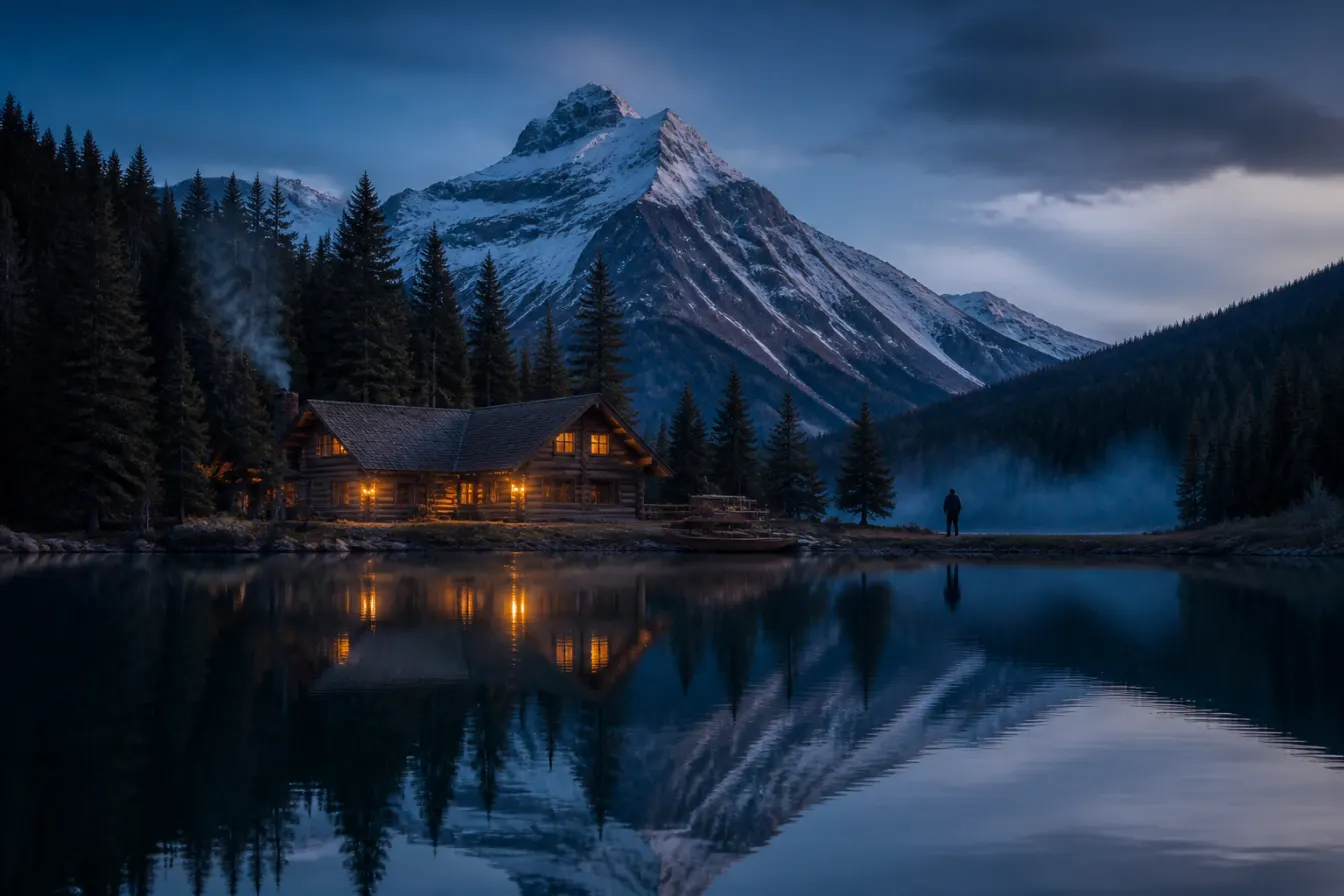
Our camps are canvas wall tents and log cabins, reached on horseback along a forest trail. We hunt the Blackstone and Wapiabi country northwest of Nordegg, Alberta, roughly three and a half hours from the Calgary and Edmonton airports, and our territory sits inside a zone where motorized vehicles are prohibited. No trucks, no quads, no side-by-sides. You ride in on a horse or you walk, the same way this country has been outfitted for more than a hundred years. That single rule, no motors, is why the hunting holds up: the animals here are not chased by machines, so they behave like wild animals.
A wall tent camp is rustic on purpose. Wood and propane heat, solar light, no wall socket to charge a phone. What you get instead is a base camp deep in the mountains that a truck can never reach, a woodstove at the end of a hard day, and the kind of quiet that only exists where engines cannot go. It is not for the hunter who needs a hot shower every night. It is for the hunter who wants to be a hunter and a horseman for ten days, and to hunt country that stays wild because of how hard it is to reach. You can read more about the camps on our backcountry cabins page.
Why the horse trail matters
Our zone bans motorized vehicles, so the only way in is on horseback or foot. That is the whole reason the country still hunts wild. See our Alberta hunts.
How camp style moves the price
Camp style changes the cost logic more than most hunters expect. A lodge folds its building, power and staff into the price, and the comfort is part of what you buy. A fly-in hunt adds the aircraft as a separate and unavoidable expense on top of the hunt itself, which is why remote fly-in trips sit at the higher end of the market. A horseback wall tent hunt spends its money on stock, packers and the days it takes to work country a truck cannot touch, not on plumbing.
None of the three is cheap done right, and the honest ranges bear that out. Across Canada a guided elk hunt commonly runs from about $5,000 to $12,000 USD, a rut moose hunt from roughly $15,500 to $17,500, and a mountain bighorn tag can climb past $45,000 to near $100,000, with pricing driven far more by species, allocation scarcity and days afield than by the roof over your head. Our own published elk rut hunt is $9,500 USD for ten days, and it includes guides, accommodations, meals, transport during the hunt and airport transfers, with pre and post-hunt lodging as well. When you compare outfitters, compare what the price includes before you compare the number, and read the full cost picture for the species you want.
| Style | Where the money goes | Typical position in the market |
|---|---|---|
| Lodge | Building, power, kitchen, staff | Comfort premium, road access |
| Fly-in | Aircraft charter on top of the hunt | Higher end, remoteness premium |
| Wall tent and cabin | Horses, packers, days in wild country | Priced by species and allocation, not plumbing |
Which style is right for you
Match the camp to the hunt you actually want, not to the one that photographs well. If comfort, easy travel or a non-hunting companion is the priority, a lodge is the honest answer and there is no shame in it. If the entire point is to reach country no road touches and you can absorb a charter and a weather delay, a fly-in earns it. If what you are chasing is the hunt itself, wild animals in unroaded mountains and ten days living as a hunter and a horseman, then a wall tent and cabin camp on a horse trail is the one, and it is the one we run. Tell us your species, your dates and how far off the grid you want to be, and we will lay out exactly what our camps are like.
Common questions
Q. What is the difference between a hunting lodge and a wall tent camp?
A lodge is a fixed building with beds, power and a road in, so you hunt out and back each day in comfort. A wall tent camp is canvas and woodstoves reached on horseback deep in the backcountry, rustic on purpose, and it puts you in country a road cannot reach.
Q. Are fly-in hunts worth the extra cost?
They can be, when the whole point of the trip is to reach unroaded wilderness. The aircraft is a real cost on top of the hunt and you are committed to the weather, so build slack into your travel and do not book a fly-in if a fixed departure home is non-negotiable.
Q. Why does your camp use horses instead of trucks?
Our territory northwest of Nordegg sits inside a zone where motorized vehicles are prohibited, so the only way in is on horseback or foot. That single rule is why the animals here are not pressured by machines and the country still hunts wild.
Q. Is a wall tent hunt uncomfortable?
It is rustic. Wood and propane heat, solar light, no wall power. You trade the hot shower for a base camp in the mountains that no truck can reach and a woodstove at the end of a hard day. It suits the hunter who wants to live as a hunter and horseman for the trip.
Q. Which camp style is cheapest?
None of the three is cheap done right. Camp style shifts where the money goes: a lodge charges a comfort premium, a fly-in adds an aircraft charter, and a horseback camp spends on stock and days afield. Price is driven far more by species and allocation scarcity than by the roof over your head.
Keep reading
Plan your hunt
Ask us about which camp style fits your hunt
Tell us what you are after. We reply within 1 to 2 business days with honest numbers, real dates and the outfitters we would send our own family to. It costs you nothing.